
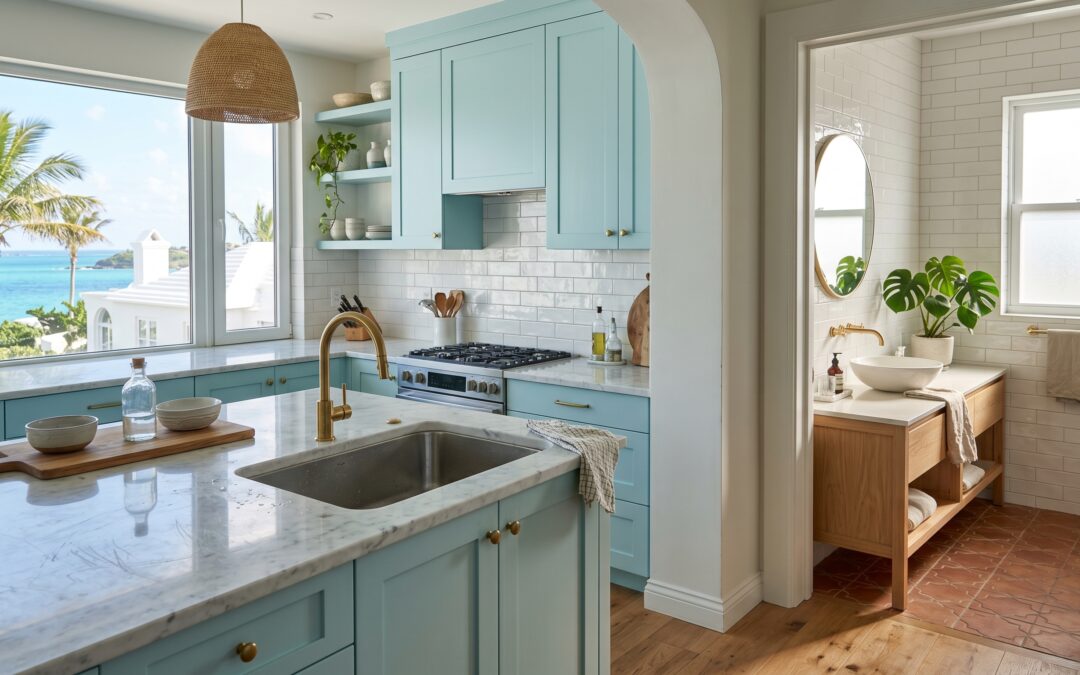
Lighting plays a bigger role in how your home looks than most people realize. It doesn’t just brighten a space — it highlights details, textures, and imperfections that might otherwise go unnoticed.
In areas like bathrooms and kitchens, where lighting tends to be brighter and more direct, surface wear becomes much easier to see. Overhead lights, under-cabinet lighting, and natural sunlight can all reflect off surfaces in ways that reveal scratches, dull spots, or uneven finishes.
This is why a bathtub or countertop might look fine during the day but appear more worn at night under artificial lighting — or the other way around. The angle and intensity of light change how surfaces are perceived.
Glossy, smooth finishes reflect light evenly, which makes a space feel cleaner and more polished. When surfaces lose that smoothness, light scatters unevenly, creating a slightly dull or patchy appearance.
Kitchens are especially affected by this because of task lighting. Areas around sinks, stovetops, and countertops are often brightly lit, which naturally draws attention to surface condition. Even small imperfections can become more noticeable in these spots.
Bathrooms experience a similar effect, particularly around mirrors and vanities where lighting is designed to be clear and direct.
Improving the condition of surfaces often has a noticeable impact on how lighting interacts with the space. When finishes are smooth and consistent again, light reflects more evenly, making the entire room feel brighter and more refreshed.
It’s one of those details that’s easy to overlook — but once you notice it, it becomes clear how much lighting and surface condition work together to shape the look of your home.