
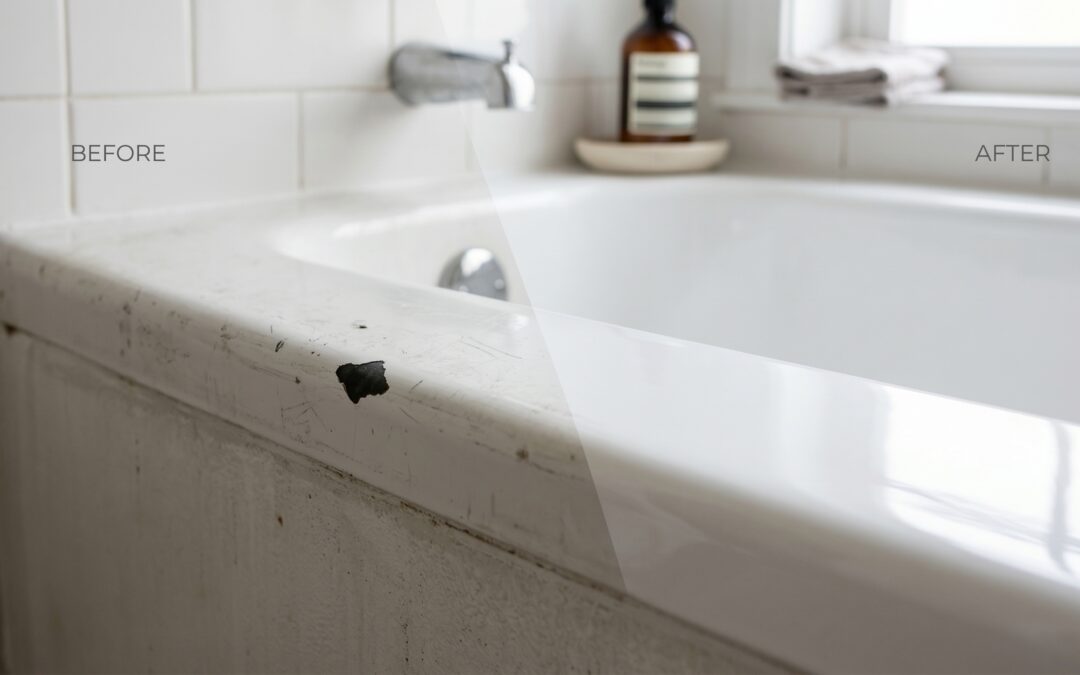
Many homeowners notice small chips, scratches, or stains on surfaces in their bathroom or kitchen and assume they’re mostly cosmetic. Since everything still works, it’s easy to ignore these minor imperfections. However, those small signs of wear are often the beginning of larger problems.
Surfaces like bathtubs, tiles, countertops, and appliances are designed with protective finishes that shield the underlying material. Over time, daily use slowly wears away that protective layer. Once it becomes thin or damaged, moisture and cleaning chemicals can begin to affect the material underneath.
A tiny chip in a bathtub, for example, can allow water to seep beneath the surface. At first, this might only cause slight discoloration or staining around the damaged area. But over months or years, that moisture exposure can weaken the surrounding surface and cause the damage to spread.
Scratches in kitchen cabinets or countertops work the same way. When the finish breaks down, oils, water, and cleaning products begin to penetrate the material. That’s when surfaces begin to look dull, faded, or uneven.
Another issue homeowners often experience is repeated staining. When surfaces lose their protective coating, stains settle more easily into the material itself rather than staying on the surface where they can be cleaned away.
This is why professional refinishing can be such a valuable preventative solution. Rather than allowing small damage to continue spreading, refinishing restores a durable protective layer that seals the surface again. It effectively resets the lifespan of the material.
Many homeowners wait until surfaces look significantly worn before considering restoration. But addressing early signs of damage often leads to better results and helps avoid more expensive replacements later.
Paying attention to small surface problems today can help keep your bathroom and kitchen looking clean, polished, and well maintained for years to come.